

Click to Read: 2025 in Review — The Year the Auto Industry Redefined the Road
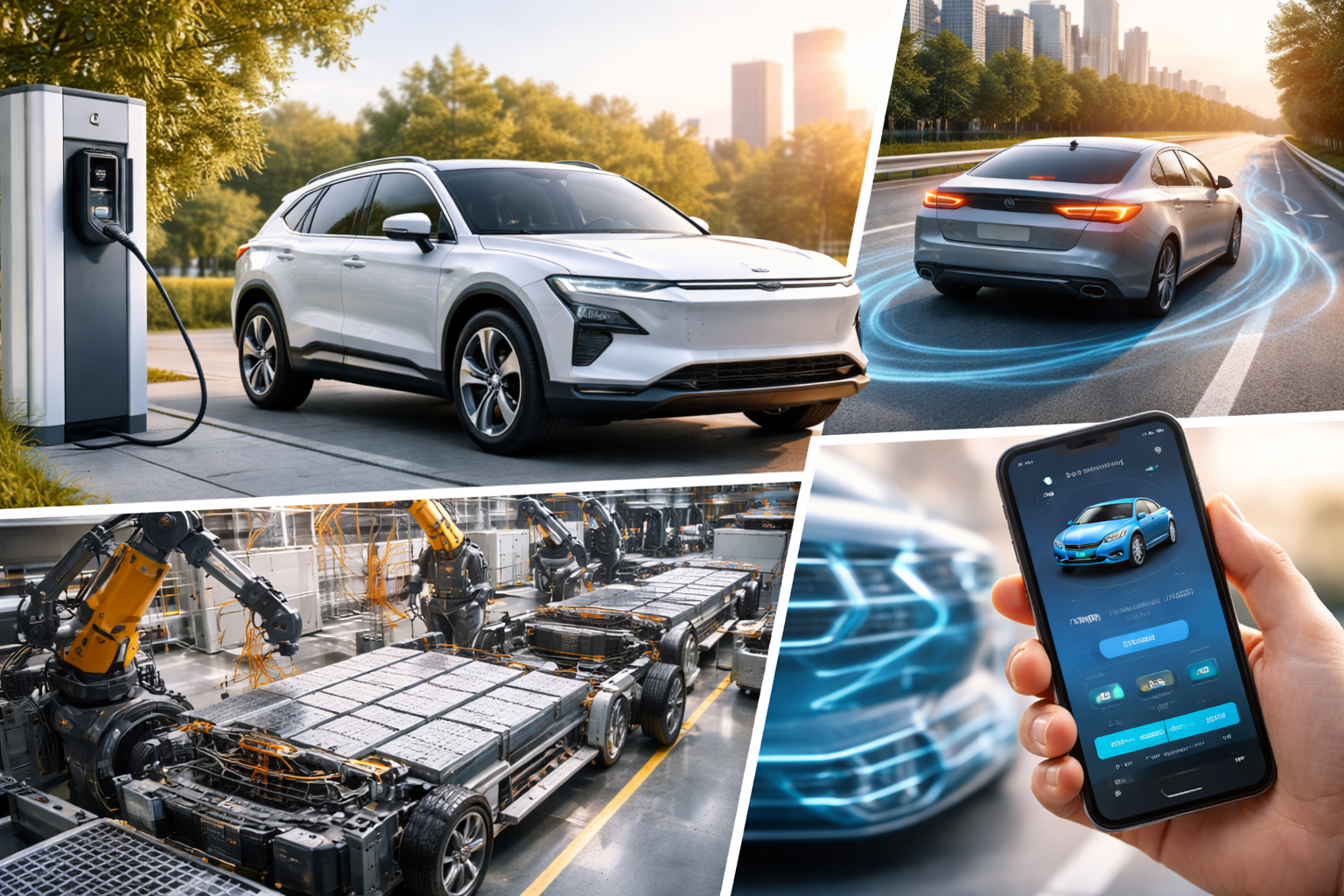
The year 2025 became a turning point for the global automotive industry. Rather than one single breakthrough, it was a convergence of technologies, regulations, and changing consumer expectations that reshaped how cars are designed, built, and used. From electrification and software-defined vehicles to new ownership models and safety standards, the automotive world moved decisively toward a smarter, cleaner, and more connected future.
Electrification Moves from Trend to Default
By 2025, electric vehicles were no longer positioned as an alternative—they became a core strategy for nearly every major automaker. Manufacturers accelerated the phase-out of purely combustion-based platforms, focusing investments on EV-only architectures. Battery technology continued to improve, with noticeable gains in real-world range stability, faster charging curves, and better cold-weather performance.
Equally important was the shift in consumer mindset. EV discussions moved away from “if” to “which one.” Buyers compared software ecosystems, charging compatibility, and long-term energy costs rather than just horsepower or engine size. Automakers responded by simplifying EV lineups, offering clearer trim structures and more transparent battery warranties.
Software-Defined Cars Take Center Stage
One of the most defining developments of 2025 was the rise of software-defined vehicles. Cars increasingly functioned as updatable platforms rather than static products. Over-the-air updates became standard across mid-range and premium segments, delivering improvements in infotainment, driver assistance, battery efficiency, and even suspension tuning without dealership visits.
Automakers invested heavily in in-house software teams, reducing dependence on third-party systems. Digital dashboards evolved into personalized environments that adapted to driver habits, navigation preferences, and energy usage patterns. Subscription-based features remained controversial, but many brands refined their approach by bundling software services more transparently.
Advanced Driver Assistance Becomes More Human-Centered
Instead of chasing full autonomy headlines, 2025 marked a shift toward practical, trust-building driver assistance systems. Automakers focused on smoother lane-keeping, better urban traffic awareness, and improved handoff between driver and system.
The industry learned that confidence mattered more than ambition. Clearer visual cues, simplified alerts, and better driver monitoring systems reduced confusion and misuse. As a result, advanced assistance features became more widely accepted, especially among everyday drivers rather than early adopters.
Sustainability Expands Beyond the Powertrain
Environmental responsibility in 2025 extended far beyond tailpipe emissions. Automakers placed new emphasis on recycled materials, low-impact manufacturing, and circular supply chains. Interiors increasingly featured recycled plastics, plant-based textiles, and modular components designed for easier repair and reuse.
Factories moved toward renewable energy sourcing, water recycling, and reduced chemical waste. Sustainability reports became less about marketing and more about measurable benchmarks, driven by both regulation and consumer scrutiny.
The Rise of Flexible Ownership Models
Traditional car ownership continued to evolve. In 2025, flexible leasing, short-term subscriptions, and shared vehicle access gained traction, particularly in urban areas. Consumers valued adaptability—being able to switch vehicle types as life circumstances changed.
Automakers experimented with direct-to-consumer sales, digital showrooms, and simplified ordering processes. While dealerships remained important, their role shifted toward service, education, and delivery rather than negotiation-heavy sales.
Design Trends: Calm, Functional, Intentional
Visually, 2025 cars reflected a calmer design language. Overly aggressive styling gave way to cleaner lines, improved aerodynamics, and interiors focused on comfort rather than distraction. Physical buttons made a modest comeback for critical functions, responding to driver feedback about touchscreen overload.
Lighting technology advanced not just aesthetically but functionally, improving visibility while reducing glare and energy consumption.
Global Challenges, Strategic Adaptation
Supply chains stabilized compared to earlier years, but automakers remained cautious. Strategic regional production, diversified sourcing, and digital logistics tools helped reduce vulnerability. At the same time, regulatory differences across markets pushed manufacturers to design flexible platforms adaptable to varying rules on emissions, safety, and data privacy.
Looking Ahead from 2025
As the industry closed out 2025, one message stood out clearly: the car is no longer just a machine—it is a service, a digital environment, and a long-term relationship. Automakers that succeeded were those that listened carefully, built responsibly, and embraced change without overwhelming the driver.
The road ahead promises even deeper integration between mobility, technology, and sustainability. And after 2025, there is little doubt that the automotive industry will never return to what it once was.