

When Rust Becomes a Risk: How Corrosion Undermines Car Body Safety
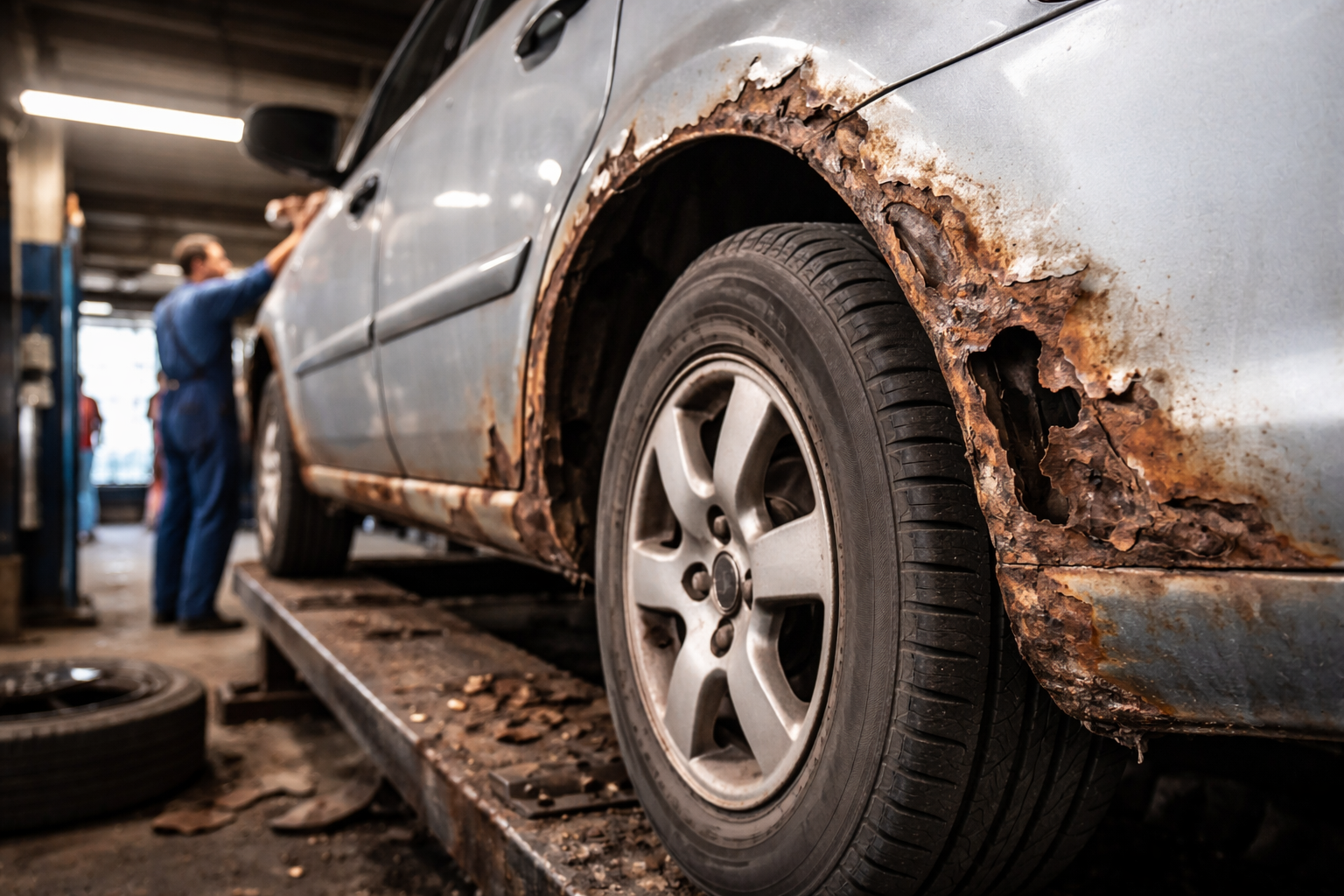
Corrosion is often dismissed as a cosmetic issue, something that makes a vehicle look older than it is. Peeling paint, bubbling panels, or reddish stains near wheel arches are frequently ignored until they become impossible to hide. In reality, corrosion is far more than a visual flaw. It is a slow but persistent process that directly affects the structural integrity of a car and, as a result, the safety of everyone inside it. Understanding how rust develops, where it spreads, and why it weakens the body of a vehicle is essential for anyone who wants to drive safely and extend the life of their car.
At its core, corrosion is a chemical reaction between metal, oxygen, and moisture. Modern vehicles are made primarily of steel, an alloy that offers strength and flexibility but is vulnerable when its protective layers are compromised. Paint, clear coat, and factory-applied sealants are designed to isolate metal from the environment. Once these barriers are scratched, chipped, or worn down, moisture can reach the steel beneath. Road salt, humidity, and temperature changes accelerate this process, especially in regions with harsh winters or coastal climates.
The danger of corrosion lies in the way it spreads beneath the surface. Rust rarely stays where it first appears. What starts as a small blemish can grow unseen behind panels, under carpets, or inside structural cavities. As corrosion progresses, it eats away at the metal, reducing its thickness and strength. Unlike a sudden mechanical failure, this weakening happens gradually, making it difficult to detect without careful inspection. By the time visible holes appear, the underlying damage is often extensive.
One of the most critical aspects of vehicle safety affected by corrosion is the car’s body structure. Modern cars rely on a unibody design, where the body and frame are integrated into a single load-bearing structure. This structure is engineered to absorb and distribute energy during a collision, protecting occupants by controlling how the vehicle deforms. When rust compromises key structural elements such as rocker panels, floor pans, pillars, or subframe mounting points, the vehicle may no longer behave as designed in a crash. Energy that should be absorbed and redirected can instead cause unpredictable collapse, increasing the risk of injury.
Corrosion also poses serious risks to passive safety systems. Seat belts, airbags, and child restraint anchors are all mounted to the vehicle’s body. If the metal around these mounting points is weakened by rust, the effectiveness of these systems can be reduced. In a severe collision, a corroded anchor point may fail under load, allowing excessive movement of occupants at the moment when restraint is most critical. This kind of failure is rare but extremely dangerous, and it underscores why rust should never be treated lightly.
Beyond crash protection, corrosion affects everyday driving safety as well. Rust can weaken suspension mounting points, leading to changes in wheel alignment and handling. It can compromise brake lines and fuel lines, increasing the risk of leaks or sudden failure. Exhaust components damaged by corrosion may develop holes that allow harmful gases to enter the cabin. Even seemingly minor rust around doors and hinges can affect how doors open after an accident, potentially hindering emergency evacuation.
Certain areas of a vehicle are particularly vulnerable to corrosion and deserve special attention. Wheel arches and lower door panels are constantly exposed to road debris and moisture. The underbody, including floor pans and crossmembers, faces continuous assault from water, dirt, and salt. Drainage channels around the windshield and sunroof can clog, trapping moisture in hidden cavities. Trunk floors and spare tire wells often collect water unnoticed, creating ideal conditions for rust to flourish. These hidden zones are where corrosion can advance the furthest before being discovered.
Manufacturers have made significant improvements in corrosion protection over the years, using galvanized steel, advanced coatings, and improved design. However, no vehicle is completely immune. Environmental factors, driving habits, and maintenance routines all play a role in determining how quickly rust develops. Regular washing, especially during winter months, helps remove salt and contaminants. Keeping drain holes clear and repairing paint chips promptly can prevent moisture from reaching bare metal. These small preventive actions can make a significant difference over time.
When corrosion is already present, early intervention is critical. Surface rust can often be treated by removing affected material, applying rust converters, and restoring protective coatings. Structural corrosion, however, is far more serious and may require professional assessment. Welding in new metal sections or replacing compromised components can be costly, but ignoring the problem can be far more expensive in terms of safety and long-term value. In some cases, severe corrosion may render a vehicle unsafe to drive, regardless of how well it runs mechanically.
The resale value of a car is also closely tied to its corrosion condition. Buyers and inspectors increasingly look beyond cosmetic appearance to assess structural integrity. A vehicle with hidden rust may fail safety inspections or require extensive repairs before it can be legally sold or registered in certain regions. From an economic perspective, addressing corrosion early is almost always more cost-effective than dealing with advanced damage later.
Ultimately, corrosion is a reminder that vehicle safety is not only about technology, sensors, and advanced driver assistance systems. It is also about the fundamental strength of the structure that protects occupants every time the car is driven. Rust silently undermines that strength, turning what seems like a minor issue into a serious safety concern. By understanding how corrosion affects the car body and taking proactive steps to prevent and address it, drivers can protect not only their investment but, more importantly, their lives and the lives of those who travel with them.