

How 5G and 6G Could Transform Connected Cars: Real-World Capabilities, Latency, and Infrastructure Challenges
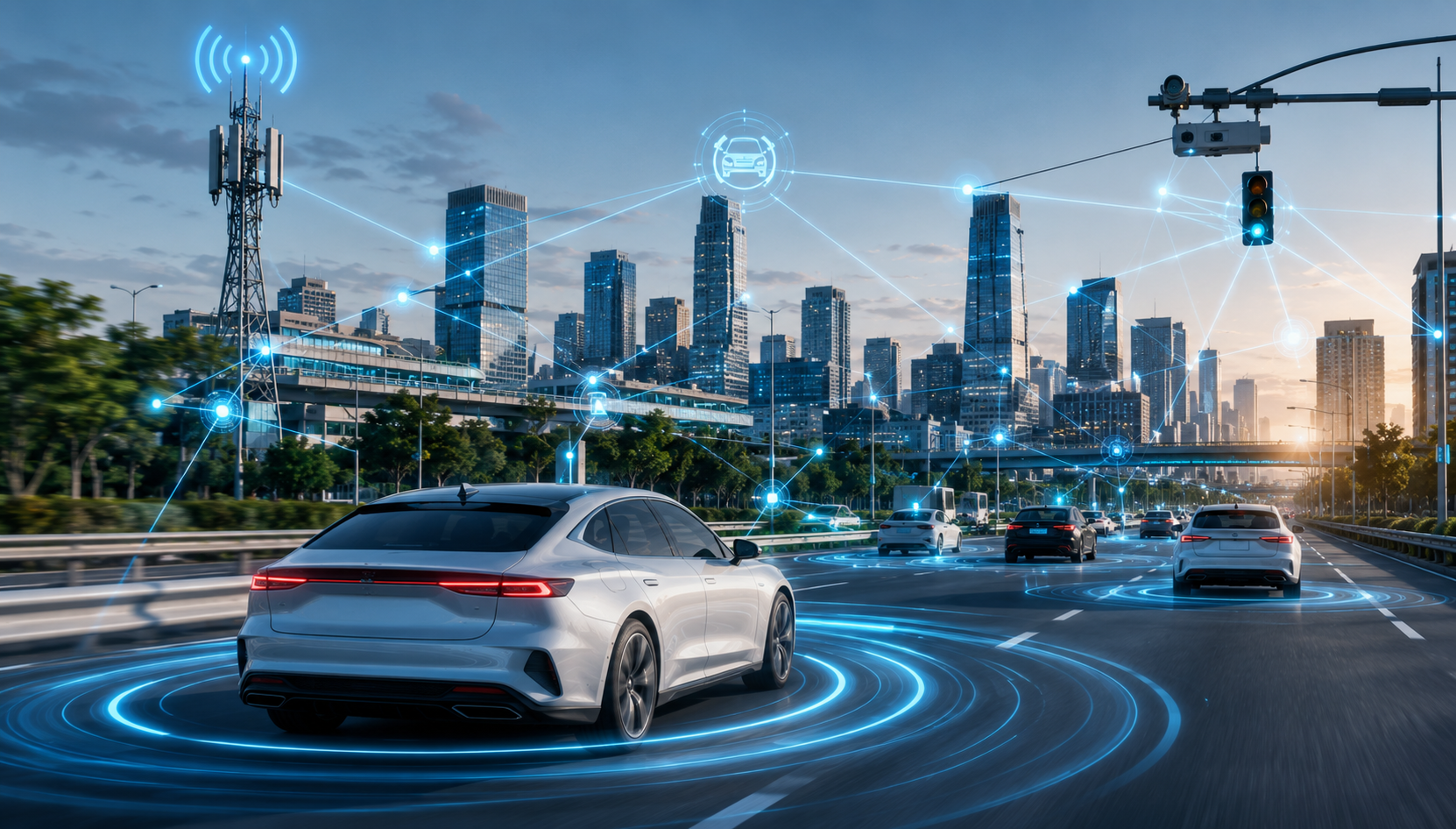
The relationship between cars and communication networks is changing rapidly. Modern vehicles are no longer isolated machines that simply transport passengers from one place to another. They increasingly depend on wireless connections for navigation, software updates, traffic information, emergency services, infotainment, and communication with surrounding infrastructure.
The arrival of 5G has created new possibilities for connected vehicles, while early research into 6G is raising expectations for even more responsive and intelligent transportation systems. However, the practical reality is more complicated than the futuristic image of cars communicating instantly with everything around them. Network coverage, infrastructure investment, cybersecurity, device compatibility, latency, and the reliability of wireless connections all determine what these technologies can actually deliver.
What 5G Changes for Connected Vehicles
5G is designed to provide higher data rates, lower latency, greater network capacity, and improved support for large numbers of connected devices. These characteristics are particularly relevant to transportation because roads contain an enormous number of moving devices, sensors, vehicles, and communication points.
A connected vehicle can use cellular networks to receive traffic information, exchange data with cloud services, download software updates, and communicate with transportation infrastructure. Faster connections can make these services more responsive and allow vehicles to transmit larger amounts of sensor and diagnostic information.
However, 5G does not automatically turn every vehicle into an autonomous machine. A vehicle still requires onboard sensors, processors, cameras, radar, software, and other systems to make decisions. Cellular connectivity is an additional layer rather than a complete replacement for local vehicle intelligence.
Understanding Latency
Latency is one of the most important concepts when discussing connected vehicles. It refers to the time required for information to travel between a device and another system.
For applications such as streaming entertainment, moderate latency may not be particularly important. For transportation, however, timing can matter considerably. A vehicle receiving information about a road hazard or changing traffic signal needs that information to arrive quickly enough to be useful.
5G can reduce communication latency compared with older generations of cellular technology, particularly when networks are properly configured and edge computing resources are available nearby. Nevertheless, low theoretical latency does not mean every real-world connection will consistently achieve it.
Network congestion, distance from infrastructure, signal conditions, routing, processing time, and application design can all affect the final response time.
Vehicle-to-Everything Communication
One of the most discussed applications of advanced connectivity is vehicle-to-everything communication, often abbreviated as V2X. The concept involves vehicles exchanging information with other vehicles, infrastructure, pedestrians, and network services.
A connected car could potentially receive warnings about a vehicle braking several cars ahead, information about an approaching emergency vehicle, or notifications about road construction. Traffic lights and roadside infrastructure could also communicate information about signal timing or changing road conditions.
These systems could improve situational awareness, particularly when information cannot be obtained through the vehicle’s own cameras or sensors.
The important limitation is that such benefits depend on widespread deployment. A vehicle cannot communicate with infrastructure that does not exist, and a connected system becomes much more useful when a large proportion of relevant vehicles and roadside systems participate.
Infrastructure Remains a Major Challenge
The biggest obstacle to advanced connected-car communication may not be the vehicle itself. It may be the infrastructure surrounding it.
High-performance wireless networks require substantial investment in base stations, fiber connections, edge computing facilities, power systems, and maintenance. Dense urban environments may justify such investments because large populations can use the infrastructure. Rural highways and remote regions present a different economic challenge.
A car traveling through an area with weak coverage cannot depend on continuous high-speed connectivity for critical functions. This means automotive systems must continue operating safely when a network connection is unavailable.
For safety-related functions, connectivity should therefore complement onboard systems rather than become a single point of failure.
Edge Computing and Faster Decisions
Another important development associated with advanced mobile networks is edge computing. Instead of sending every piece of information to a distant data center, some processing can occur closer to the vehicle.
Reducing the physical distance between the vehicle and computing resources can lower communication delays and reduce the amount of information that needs to travel through the wider internet.
For connected transportation, edge computing could support applications such as traffic optimization, cooperative perception, fleet management, and localized road intelligence.
Even so, edge computing requires new infrastructure and careful coordination between telecommunications companies, automakers, transportation authorities, and technology providers.
What About 6G?
6G is still a developing technology rather than a widely deployed automotive communication standard. Research into future networks focuses on capabilities that could go beyond the performance of today’s systems, including extremely high data rates, advanced sensing, artificial intelligence integration, and more sophisticated communication between machines.
For vehicles, this could eventually enable richer interaction between cars, infrastructure, cloud systems, and other connected devices. High-bandwidth communication could support more complex sensor-sharing applications, while integrated sensing and communication concepts could potentially help networks understand aspects of their physical environment.
However, predictions about 6G should be treated carefully. Many proposed capabilities remain subjects of research, standardization, testing, and commercial development. The final technology available to consumers may differ substantially from current visions.
Connectivity Is Not the Same as Autonomous Driving
A common misconception is that faster wireless networks will automatically produce fully autonomous cars. In reality, autonomous driving depends on many technologies working together.
Vehicles require accurate perception, reliable localization, decision-making software, control systems, redundancy, safety engineering, and extensive testing. Connectivity can provide additional information, but the vehicle must remain capable of handling situations where communication is delayed or unavailable.
This distinction is particularly important for safety-critical applications. A connected vehicle should not assume that an external message will always arrive exactly when expected.
Cybersecurity and Data Protection
Greater connectivity also creates greater cybersecurity responsibilities. A vehicle connected to cellular networks, cloud platforms, infrastructure, and other vehicles has more potential communication pathways than a traditional automobile.
Manufacturers and network operators must protect these systems against unauthorized access, malicious data, software vulnerabilities, and attempts to disrupt communication. Secure authentication, encryption, software updates, monitoring, and carefully designed network architecture are therefore essential.
Privacy is another consideration. Connected vehicles can generate large amounts of information about location, driving behavior, vehicle condition, and travel patterns. Determining how this information is collected, stored, shared, and protected will remain an important part of connected-car development.
The Role of Reliability
For many consumer applications, an occasional connection failure is simply inconvenient. In transportation, reliability has much greater importance.
A connected vehicle may use wireless information to improve traffic awareness, but critical safety systems need independent safeguards. Cameras, radar, onboard computing, braking systems, and other vehicle technologies must continue functioning when cellular coverage disappears.
This principle is likely to remain important even as networks become faster. The best automotive systems will not simply assume perfect connectivity; they will be designed to remain safe under imperfect conditions.
Where the Technology Is Most Practical Today
The most realistic benefits of advanced cellular connectivity are already visible in less futuristic applications. Connected navigation can use live traffic information, vehicles can receive remote diagnostics, manufacturers can distribute software updates, and fleets can monitor vehicles in real time.
These applications do not require a science-fiction scenario in which every vehicle continuously exchanges enormous quantities of information. They demonstrate a more gradual transformation in which connectivity becomes an increasingly important part of vehicle ownership.
Over time, more sophisticated V2X applications may become practical as network coverage, infrastructure, standards, and vehicle adoption expand.
Conclusion
5G is already influencing the development of connected vehicles, but its impact should be understood realistically. Faster speeds and lower latency can improve communication between cars, cloud services, and transportation infrastructure, while technologies such as V2X and edge computing could enable more advanced applications.
At the same time, network coverage, infrastructure costs, reliability, cybersecurity, privacy, and compatibility remain significant challenges. 6G may eventually expand these capabilities further, but many of its automotive applications are still being researched and developed.
The future of connected transportation will therefore depend not on wireless speed alone, but on how effectively vehicles, communication networks, infrastructure, software, and safety systems are integrated. Connectivity can make cars more informed and responsive, but the most useful progress will come from building systems that remain reliable even when the network is imperfect.