

Flying Cars and eVTOL: Are We Closer Than We Think? Real Projects, Real Progress, and the Road to Commercial Flight
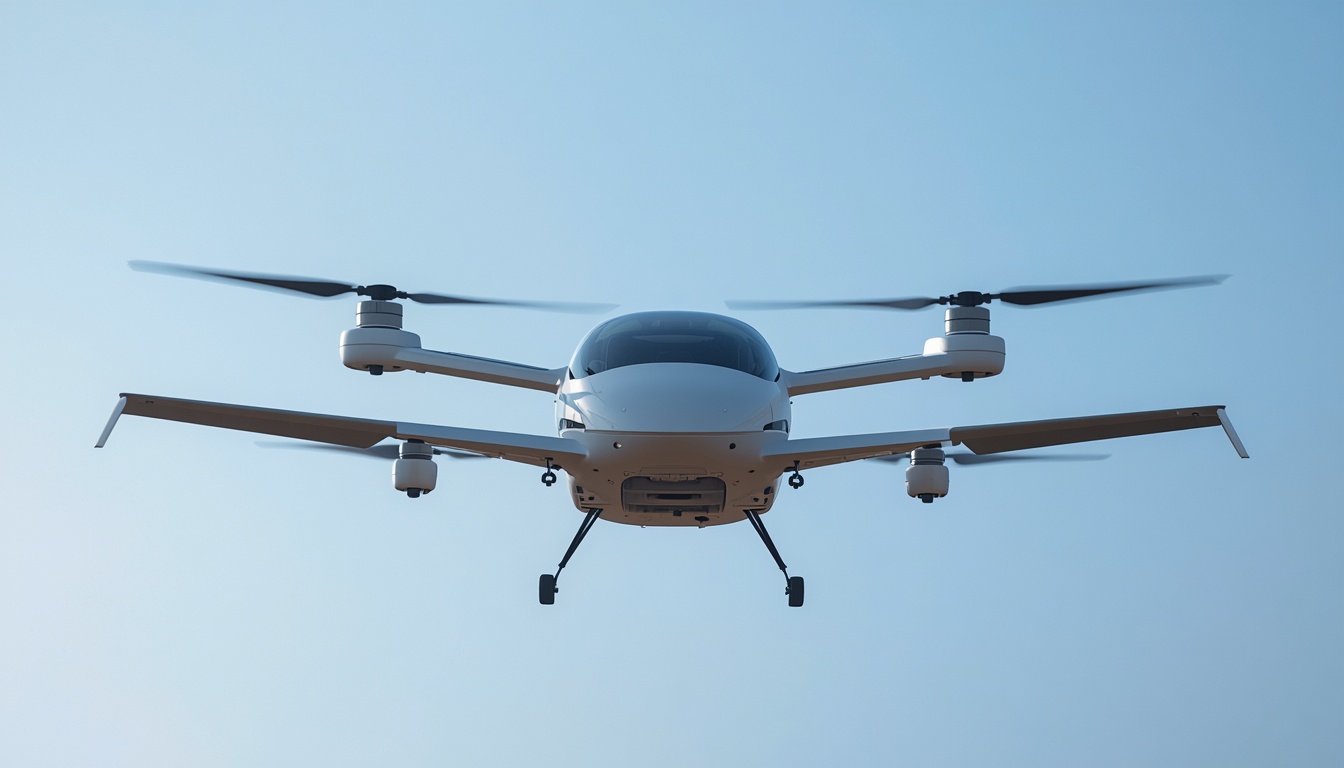
For decades, flying cars have belonged to the world of science fiction. Futuristic movies showed commuters leaving crowded roads, lifting vertically from city streets, and traveling above traffic in personal aircraft. Today, that vision is no longer purely imaginary. A new generation of electric vertical takeoff and landing aircraft, commonly known as eVTOLs, is being developed by aerospace companies around the world.
Yet the reality is more nuanced than the popular image of a flying car parked outside every home. Most current eVTOL projects are not designed to operate like ordinary automobiles that can simply leave a driveway and fly anywhere. Instead, the industry is initially focused on electric air taxis, airport transfers, regional transportation, cargo services, and specialized missions.
The technology is progressing rapidly, but certification, infrastructure, battery performance, airspace management, manufacturing, and economics will determine how quickly these aircraft become part of everyday transportation.
What an eVTOL Actually Is
The term eVTOL describes an electric aircraft capable of vertical takeoff and landing. This category includes several different designs. Some use multiple rotors that operate throughout the flight, while others combine vertical-lift propellers with wings designed for efficient forward flight.
This distinction is important because eVTOLs are not necessarily “cars that fly.” Many are closer to compact electric aircraft designed to operate from specialized landing sites. They may carry several passengers and a pilot, with future versions potentially incorporating increasingly automated flight systems.
The advantage of vertical takeoff is obvious for urban transportation. An aircraft does not need a conventional runway, making it possible to operate from relatively compact vertiports. Once airborne, winged designs can potentially travel faster and more efficiently than helicopters over suitable routes.
Joby Aviation and the Push Toward Air Taxis
Joby Aviation is one of the most closely watched companies in the sector. Its aircraft is designed as a five-seat electric air taxi, with one pilot and four passengers. The company has been working through the demanding FAA certification process and has conducted extensive flight testing.
As of 2026, Joby’s certification effort remains a central milestone for the industry. Recent reporting indicates that certification is expected around late 2026 or early 2027 rather than the much earlier commercial dates that were once discussed.
That shift illustrates an important reality: building a prototype that can fly is only one part of creating a commercial aircraft. The aircraft must demonstrate compliance with rigorous safety requirements, and the manufacturer must establish a production system capable of producing certified aircraft consistently.
The FAA describes aircraft certification as a seven-phase process covering standards, definition, design, manufacturing, testing, certification, and production.
Archer Aviation and the Midnight
Archer Aviation is another major player pursuing commercial electric air taxi operations. Its Midnight aircraft is intended for short passenger journeys and is designed around the idea of connecting transportation hubs rather than replacing conventional cars for every trip.
The company has also been exploring military applications as the civil certification process continues. This broader strategy reflects a growing trend in the industry: eVTOL technology may find useful applications beyond passenger air taxis, including logistics, emergency response, medical transportation, and defense.
Recent industry developments show that civil certification is proving expensive and time-consuming, encouraging several developers to pursue military or specialized applications that can provide additional revenue and operational experience.
BETA Technologies and Practical Applications
BETA Technologies has taken a somewhat broader approach to electric aviation, developing aircraft for both vertical takeoff and conventional runway operations. The company has accumulated substantial flight experience with its electric aircraft and is also pursuing specialized applications.
In July 2026, the FAA announced a flight test involving BETA Technologies and United Therapeutics to demonstrate electric aircraft for organ medical transportation between Virginia and Maryland. The test took place under the FAA’s Electric Vertical Takeoff and Landing Integration Pilot Program.
Medical logistics could become an important early use case because the value of rapid transportation can justify the cost of emerging aircraft technology. Moving organs, medical supplies, or emergency personnel may provide more immediate economic benefits than trying to replace ordinary commuter trips.
Why Certification Takes So Long
Aviation certification is deliberately demanding. An aircraft carrying passengers cannot be treated like a consumer electronics product that can be released and updated later.
Engineers must demonstrate that propulsion systems, batteries, flight controls, structures, software, emergency procedures, and numerous other components meet applicable safety requirements. Testing must cover a wide range of operating conditions and failure scenarios.
The FAA has established specific guidance for powered-lift aircraft, including eVTOL-type designs. Its advisory framework provides certification guidance for these aircraft and their airworthiness criteria.
The regulatory framework has also evolved. In 2024, the FAA finalized rules covering powered-lift pilot certification and operations, creating a framework for integrating this new aircraft category into the national airspace system.
Batteries Remain a Fundamental Challenge
Electric propulsion offers major advantages, including potentially lower local emissions, quieter operation, and fewer mechanical components than conventional turbine or piston propulsion. However, batteries remain much heavier than liquid fuels for the amount of usable energy they store.
For an eVTOL aircraft, weight is critical. Every additional kilogram of battery affects payload, range, performance, and reserves. Unlike a road vehicle, an aircraft cannot simply stop at the side of the road if its energy supply becomes unexpectedly low.
This creates a difficult engineering balance between range, passenger capacity, battery weight, safety margins, and charging requirements.
Short urban routes are therefore more realistic in the early stages than long-distance flights. As battery technology improves, aircraft could potentially operate more efficiently and cover longer distances, but major improvements in energy density cannot simply be assumed on a specific timetable.
Vertiports Will Be Just as Important as Aircraft
Even if certified eVTOL aircraft become available, passengers will still need places to take off and land. This creates an infrastructure challenge that is sometimes overlooked in discussions about flying cars.
Vertiports will need appropriate landing areas, passenger facilities, charging systems, safety zones, access roads, and connections with existing transportation. Their locations will determine whether air taxis actually save meaningful travel time.
Recent industry planning is increasingly focused on mobility hubs that combine air taxis with other forms of transportation such as robotaxis and conventional ground travel.
A successful system will therefore depend on integrating aircraft into existing transportation networks rather than treating them as completely independent vehicles.
Why Personal Flying Cars Are Still Farther Away
The phrase “flying car” creates expectations that current eVTOL technology cannot yet fulfill. A true personal flying car would ideally be affordable, simple enough for ordinary consumers, capable of operating from convenient locations, and safe without requiring extensive aviation infrastructure.
That is a much harder problem than creating a commercial air taxi.
Air traffic management, pilot licensing, maintenance, weather limitations, noise, insurance, emergency procedures, and property restrictions all become important when thousands of aircraft operate close to populated areas.
For this reason, the first practical stage of advanced air mobility is much more likely to resemble a network of regulated air taxis than millions of privately owned flying cars.
What the First Services May Look Like
The earliest commercial services are likely to focus on routes where flying provides a clear advantage over road transportation. Airport transfers are an obvious example. A short flight between an airport and a distant urban center could potentially save substantial time compared with traveling through congested roads.
Other possibilities include connections between suburban areas and business districts, transportation between separated cities, medical logistics, disaster response, and specialized cargo operations.
These initial services will probably operate on limited routes with carefully managed infrastructure. As operators gain experience and regulators become more familiar with the technology, the number of routes could gradually expand.
Are We Really Close?
The answer depends on what “close” means.
If the question is whether electric aircraft capable of vertical takeoff are real, the answer is clearly yes. Full-scale prototypes have flown, certification programs are active, and regulators are developing specific frameworks for powered-lift aircraft. Real-world testing is already taking place, including medical transportation demonstrations.
If the question is whether anyone will soon own an affordable flying car that can leave a suburban driveway and fly independently to work, the answer is much less certain.
The industry is currently much closer to commercial electric air taxis than to the science-fiction version of a universal flying car.
A More Realistic Timeline
The most credible path is gradual. The late 2020s are likely to be an important period for certification, pilot programs, specialized operations, and early commercial services. Some manufacturers are targeting certification and initial passenger operations around this period, although schedules can change as testing and regulatory requirements evolve.
The early 2030s could potentially bring broader deployment if certification, manufacturing, infrastructure, and economics develop successfully. Wider adoption would still depend on whether operators can offer useful routes at prices that attract ordinary passengers.
Personal ownership on a mass-market scale is a much more distant and uncertain proposition.
Conclusion
Flying cars are no longer just a futuristic fantasy, but the real revolution is likely to arrive differently from the way science fiction imagined it. Electric vertical takeoff and landing aircraft are already flying, certification frameworks are being established, and companies such as Joby, Archer, and BETA are moving toward practical operations.
The first stage will probably involve regulated air taxis, medical missions, cargo transportation, and carefully selected routes rather than personal aircraft replacing ordinary cars. Battery limitations, certification requirements, vertiport construction, airspace management, and operating costs remain substantial obstacles.
The important point is that the question has changed. It is no longer whether electric aircraft capable of vertical flight can be built. They can. The real question is how quickly the aviation industry, regulators, cities, and infrastructure providers can build a safe and economically viable system around them. That transformation may be closer than many people think, but it will arrive step by step rather than all at once.