

Software-Defined Cars: Why Vehicle Updates Are Becoming as Important as Engine Upgrades
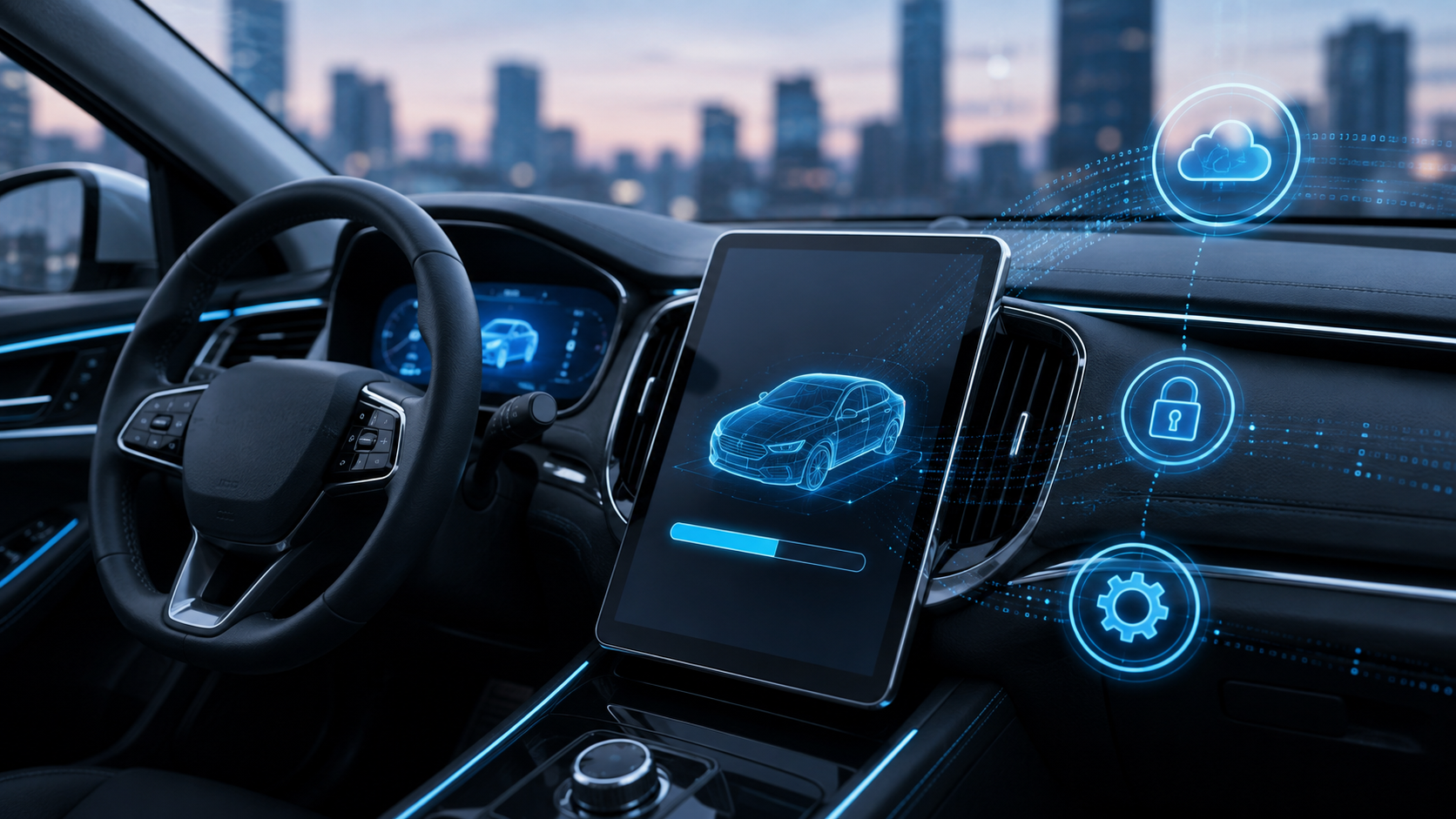
For decades, buying a new car usually meant comparing engines, transmissions, fuel economy, safety equipment, interior design, and physical features. Today, another factor is becoming increasingly important: software. Modern vehicles contain dozens of electronic control units responsible for everything from braking and steering assistance to climate control, infotainment, battery management, and driver assistance systems.
This transformation is creating a new type of automobile: the software-defined vehicle. Instead of receiving a fixed set of capabilities when it leaves the factory, a modern car can continue to change after purchase through software updates. Features can be improved, interfaces redesigned, bugs corrected, and in some cases entirely new functions introduced without replacing the physical vehicle.
This shift could fundamentally change the relationship between drivers and their cars.
What Is a Software-Defined Vehicle?
A software-defined vehicle is an automobile in which software plays a central role in controlling functions and delivering features. Traditional cars certainly contain software, but newer architectures increasingly connect different systems through centralized computing platforms rather than relying on numerous isolated electronic modules.
The difference is important. In an older vehicle, adding a new feature might require installing a new physical component. In a software-oriented vehicle, some capabilities can potentially be activated or improved through a digital update.
The concept resembles the way smartphones have evolved. A phone purchased several years ago can receive a new operating system, security improvements, interface changes, and new applications. Cars are beginning to follow a similar model, although automotive software has considerably more demanding safety requirements.
Why Over-the-Air Updates Matter
One of the most visible consequences of software-defined vehicles is the rise of over-the-air updates. Instead of requiring an owner to visit a dealership for every software improvement, manufacturers can potentially distribute certain updates remotely.
This can make vehicle ownership more convenient. A manufacturer may be able to correct a software problem, improve navigation, refine battery management, or adjust an electronic system without requiring the driver to schedule a service appointment.
For manufacturers, remote updates can also provide valuable information about recurring problems. If software behavior reveals that a particular function is not performing as expected, engineers may be able to develop and distribute an improvement more quickly than would be possible with a traditional service campaign.
However, remote updating also creates new responsibilities. A car is not a smartphone, and software changes affecting safety-critical systems require considerably more caution.
The Growing Importance of Vehicle Cybersecurity
As vehicles become more connected, cybersecurity becomes an increasingly important part of automotive engineering.
Modern cars may communicate with smartphones, wireless networks, navigation services, charging infrastructure, mobile applications, and cloud-based systems. Each connected function creates another potential pathway that must be protected.
A cybersecurity problem in an automobile can have consequences that are very different from those of a compromised consumer device. Vehicle systems can affect acceleration, braking, steering assistance, doors, charging, and other physical functions.
Manufacturers therefore need to design security into vehicles from the beginning rather than treating it as an optional feature added later. Regular software maintenance can become an important part of protecting a vehicle throughout its useful life.
For drivers, this may eventually mean that keeping a car’s software updated becomes as normal as checking tire pressure or changing fluids.
New Features Could Arrive After the Car Is Sold
One of the most interesting possibilities created by software-defined vehicles is the ability to add capabilities after the initial purchase.
A car could potentially receive improved driver-assistance algorithms, enhanced energy-management strategies, redesigned navigation features, new entertainment functions, or additional personalization options years after it first reaches the road.
This could make a vehicle feel less static. Instead of becoming technologically outdated simply because newer models have been released, an older vehicle might continue receiving meaningful improvements.
There is an important distinction, however, between software and hardware. An update cannot magically give a vehicle a sensor, camera, processor, or physical mechanism that it does not possess. Some future functions will still require hardware that was installed when the car was manufactured.
Software can expand the usefulness of existing hardware, but it cannot eliminate physical limitations.
What Does This Mean for Car Buyers?
The shift toward software creates new questions for people choosing a vehicle.
Traditionally, buyers might ask about engine power, cargo capacity, fuel consumption, warranty coverage, and maintenance costs. Increasingly, they may also want to know how long a manufacturer intends to support the vehicle with software updates.
A car with impressive hardware may become less attractive if its software support ends quickly. Conversely, a vehicle with a strong computing platform and long-term update strategy could potentially remain useful for much longer.
This may eventually make software support a meaningful part of resale value. Used-car buyers could start asking not only how many miles a vehicle has traveled but also which software functions it supports and whether its manufacturer still provides updates.
The Subscription Question
Software-defined vehicles also introduce a controversial business model: subscription-based features.
Some manufacturers have explored charging customers recurring fees for certain digital functions. In theory, this allows owners to activate features when they need them instead of paying for everything upfront.
The model could be convenient in some circumstances, but it also raises questions about ownership. If a vehicle physically contains a feature but access depends on a subscription, drivers may feel that they are renting part of a product they already purchased.
The debate is likely to continue as manufacturers search for sustainable ways to generate revenue after a vehicle has been sold.
Benefits for Long-Term Vehicle Maintenance
Software can also influence traditional maintenance.
Connected vehicles can monitor operating conditions and identify unusual patterns before a problem becomes obvious to the driver. Data from sensors may help service centers prepare for repairs by indicating which component is likely to require attention.
This could make maintenance more predictive rather than reactive. Instead of waiting for a warning light or mechanical failure, a vehicle might alert its owner that a particular system should be inspected.
Such technology will not eliminate mechanical wear. Tires, brakes, suspension components, fluids, batteries, and other physical parts will still require inspection and replacement. However, better monitoring could help owners understand the condition of these components more accurately.
Will Software Make Cars More Sustainable?
The environmental implications are complicated.
If software updates allow vehicles to remain useful for longer, owners may have less incentive to replace them simply because their technology feels outdated. Extending the useful life of a vehicle could reduce some of the environmental costs associated with manufacturing replacement cars.
At the same time, increasingly sophisticated electronic systems require more computing hardware, sensors, and batteries. Manufacturing these components consumes energy and raw materials.
The environmental value of software-defined vehicles will therefore depend partly on how manufacturers design them for longevity, repairability, security, and eventual recycling.
A vehicle that receives years of useful updates but becomes impossible to repair economically may not deliver the same long-term benefits as one designed around durable and replaceable components.
A New Definition of a Car
The rise of software-defined vehicles does not mean the mechanical automobile is disappearing. Engines, electric motors, suspension systems, tires, brakes, steering components, and physical structures remain fundamental.
What is changing is the layer connecting these components with the driver.
Cars are becoming platforms that combine mechanical engineering with computing, connectivity, artificial intelligence, and continuously evolving software. This could make vehicles safer, more adaptable, and more personalized, but it also introduces questions about cybersecurity, privacy, subscriptions, software support, and ownership.
For drivers, the biggest change may be psychological. A car will no longer necessarily be a finished product on the day it leaves the dealership. It can become a product that continues to evolve throughout its lifetime.
The future automotive market may therefore be shaped not only by who builds the most powerful engine or the largest battery, but by who can create software that remains secure, useful, reliable, and upgradeable for years. The next generation of automotive competition may take place as much inside a vehicle’s computer architecture as it does under its hood.