

Hydrogen vs Electric: Which Technology Will Win the Future of Cars?
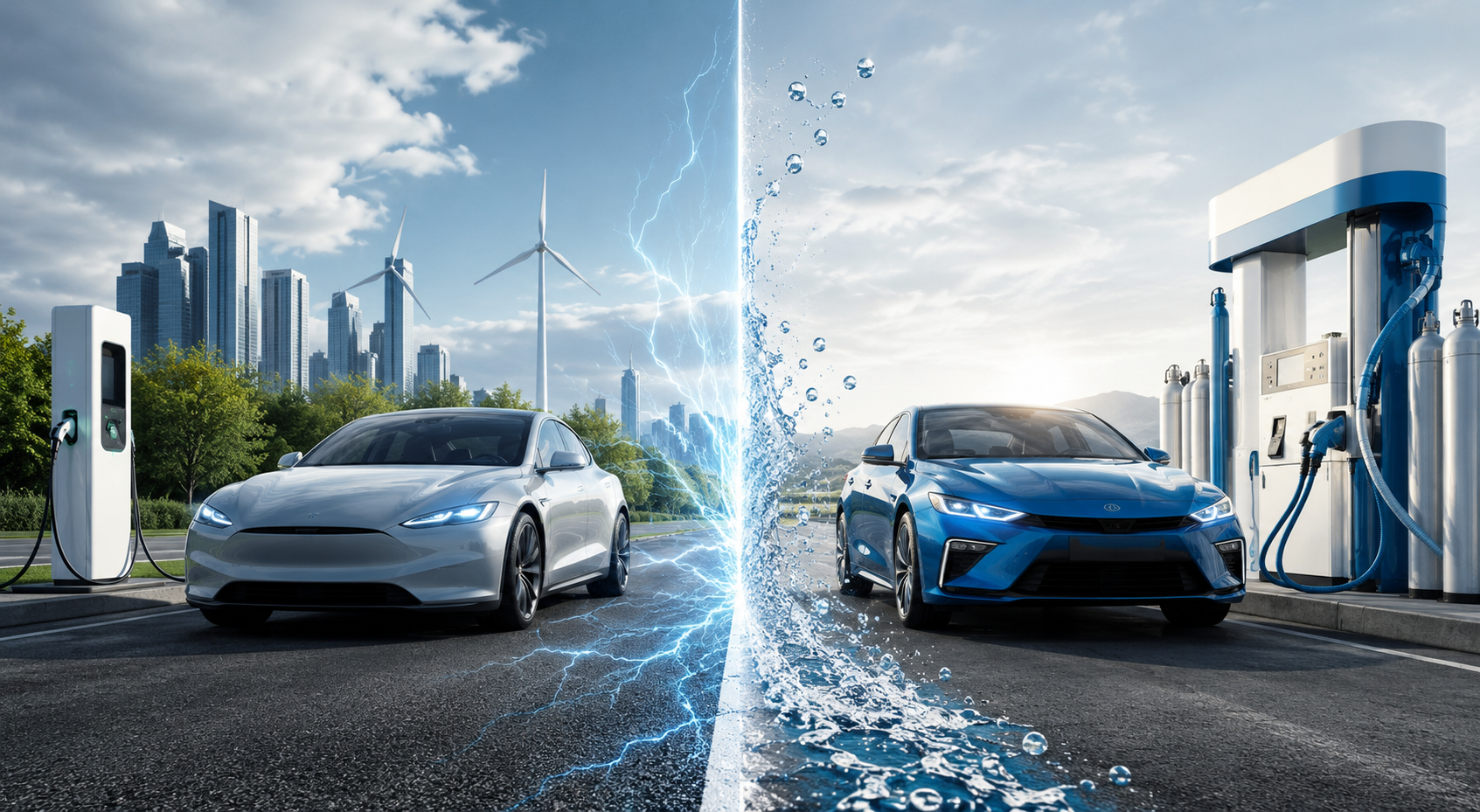
The automotive industry is undergoing one of the most significant transformations in its history. After more than a century dominated by internal combustion engines, manufacturers are investing billions of dollars into cleaner propulsion technologies. Among all the alternatives, two solutions have emerged as the primary contenders for the future of personal transportation: battery electric vehicles (BEVs) and hydrogen fuel cell electric vehicles (FCEVs). Both promise zero tailpipe emissions, quieter driving experiences, and reduced dependence on fossil fuels. However, they achieve these goals through fundamentally different technologies, each with unique strengths, weaknesses, and long-term challenges.
Rather than viewing hydrogen and electricity as direct enemies, it is more accurate to see them as competing approaches designed to solve different transportation problems. Understanding how each technology works provides valuable insight into which may dominate future roads and where both could coexist.
How Battery Electric Vehicles Work
Battery electric vehicles store electricity inside large rechargeable lithium-ion battery packs. The stored energy powers one or more electric motors, converting electrical energy into mechanical movement with remarkable efficiency. Unlike gasoline-powered cars, electric vehicles have relatively few moving parts, resulting in lower maintenance requirements and quieter operation.
One of the biggest advantages of battery-powered cars is energy efficiency. A large percentage of the electricity drawn from the battery reaches the wheels, making BEVs one of the most efficient forms of transportation ever developed. Charging infrastructure has expanded rapidly across many countries, allowing owners to recharge at home, workplaces, or public charging stations.
Modern electric vehicles also benefit from regenerative braking, a system that captures energy normally lost during braking and returns it to the battery. This feature improves overall efficiency while reducing brake wear.
Concept vehicles such as the Mercedes-Benz Vision EQXX have demonstrated just how far battery technology has progressed. Designed with extreme aerodynamic efficiency and lightweight construction, the Vision EQXX showcased exceptional driving range while using significantly less energy than conventional electric vehicles. Similarly, BMW’s Vision Neue Klasse concepts preview a future focused on improved battery density, faster charging, and more sustainable manufacturing methods.
Understanding Hydrogen Fuel Cell Technology
Hydrogen fuel cell vehicles also use electric motors to drive the wheels, but they generate electricity differently. Instead of relying solely on stored battery energy, hydrogen gas is stored in high-pressure tanks. Inside the fuel cell stack, hydrogen reacts with oxygen from the atmosphere, producing electricity, heat, and water vapor. The only tailpipe emission is water, making the technology environmentally attractive when the hydrogen itself is produced sustainably.
One of hydrogen’s greatest advantages is rapid refueling. Filling a hydrogen tank takes only a few minutes, providing a driving experience similar to traditional gasoline vehicles. Long driving range is another major benefit, making hydrogen especially appealing for commercial fleets and long-distance transportation.
Several manufacturers have demonstrated confidence in fuel cell technology through production and concept vehicles. The Toyota Mirai represents one of the most recognizable hydrogen-powered passenger cars, while Hyundai’s N Vision 74 concept combines hydrogen fuel cells with battery technology to showcase how hybrid energy systems could deliver both performance and extended driving range. Honda has also continued investing in fuel cell research through multiple prototype programs aimed at future mobility.
Infrastructure: The Deciding Battlefield
Technology alone rarely determines market success. Infrastructure often becomes the deciding factor.
Battery electric vehicles currently enjoy a significant advantage because electrical grids already exist almost everywhere. Although fast-charging stations continue to expand, nearly every home can potentially become a charging location. Overnight charging fits naturally into many daily routines, reducing the need for frequent visits to dedicated charging stations.
Hydrogen infrastructure presents a more difficult challenge. Producing, transporting, compressing, and storing hydrogen requires specialized facilities that are expensive to build and maintain. Public hydrogen stations remain relatively scarce in most countries, limiting consumer confidence despite the attractive refueling speed.
However, infrastructure requirements vary by application. Centralized hydrogen stations serving buses, trucks, ports, or industrial fleets may prove economically practical because many vehicles operate from the same location.
Environmental Impact Beyond Tailpipe Emissions
Both technologies eliminate direct tailpipe carbon dioxide emissions, but their overall environmental impact depends heavily on energy production.
Electric vehicles are only as clean as the electricity used to charge them. Regions powered primarily by renewable energy sources allow BEVs to achieve very low lifetime emissions. As electrical grids continue transitioning toward wind, solar, hydroelectric, and nuclear power, the environmental benefits of electric vehicles are expected to grow.
Hydrogen tells a more complicated story. Most hydrogen produced today comes from natural gas, generating substantial carbon emissions during production. Truly sustainable «green hydrogen» is created through electrolysis powered by renewable electricity, but this process remains relatively expensive and energy-intensive. As renewable energy expands and production costs decline, green hydrogen could become a much more competitive option.
Performance and Practicality
Battery electric vehicles deliver instant torque, smooth acceleration, and exceptionally quiet operation. Improvements in battery chemistry continue increasing driving range while reducing charging times. Many modern BEVs now exceed 500 kilometers on a single charge, making them suitable for everyday driving and long-distance travel alike.
Hydrogen vehicles excel in situations where minimal downtime is essential. Commercial operators value fast refueling because vehicles spend less time parked and more time transporting passengers or cargo. Heavy-duty trucks, construction equipment, ships, and even aviation projects increasingly explore hydrogen because batteries become extremely heavy as energy demands increase.
This distinction may ultimately define the future: batteries dominate passenger transportation, while hydrogen expands into sectors requiring high energy density and continuous operation.
Can Both Technologies Coexist?
History suggests that transportation rarely relies on a single solution. Diesel engines, gasoline engines, hybrids, and battery electric vehicles already coexist because different customers have different priorities.
The future may follow a similar pattern. Urban commuters could overwhelmingly adopt battery electric vehicles thanks to convenient home charging and growing public infrastructure. Long-haul freight, public transportation, industrial machinery, and specialized commercial applications may increasingly rely on hydrogen fuel cells where quick refueling and extended range provide clear operational advantages.
Automakers are already preparing for this possibility by investing in both technologies simultaneously instead of choosing only one path.
Conclusion
The question is not simply whether hydrogen or electricity will win. Battery electric vehicles currently hold a substantial lead due to expanding charging infrastructure, falling battery costs, and widespread consumer adoption. Nevertheless, hydrogen continues to offer compelling advantages in applications where rapid refueling, long range, and heavy payloads are essential.
Instead of replacing one another, these technologies may ultimately form complementary parts of a cleaner transportation ecosystem. Battery-powered vehicles appear poised to dominate everyday personal mobility, while hydrogen may become indispensable for commercial transport and specialized industries. As engineering advances and renewable energy becomes increasingly accessible, both technologies are likely to shape the next generation of automobiles, proving that the future of mobility may have more than one winner.